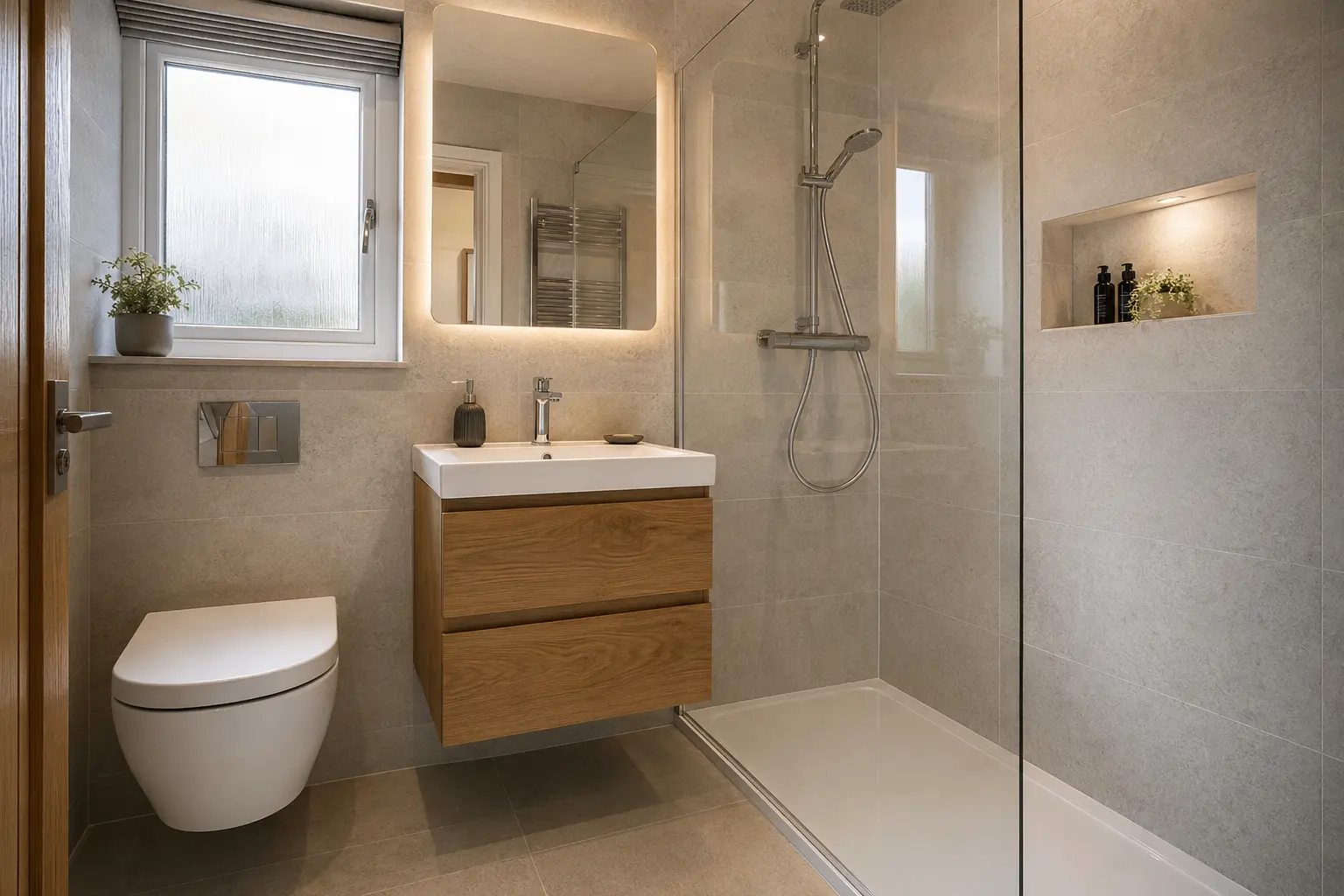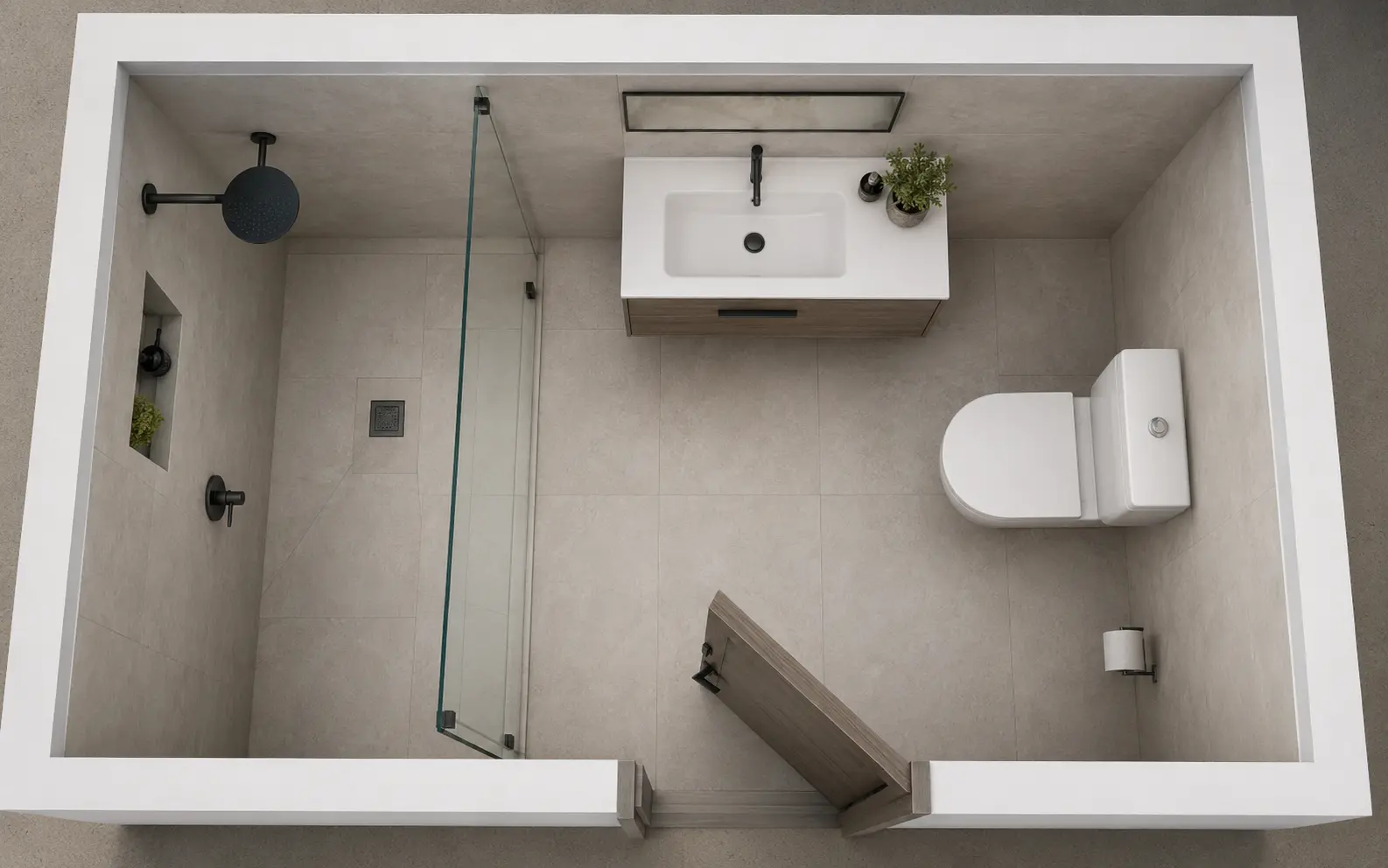
Define the result before choosing products
List what is wrong with the existing room and what must improve. More storage, safer access or a larger shower may matter more than moving every fitting.
Separate essentials from preferences and optional upgrades. This keeps the plan focused when several attractive choices compete for the same money.
- Must solve
- Would improve the room
- Optional upgrade
- Can be added later
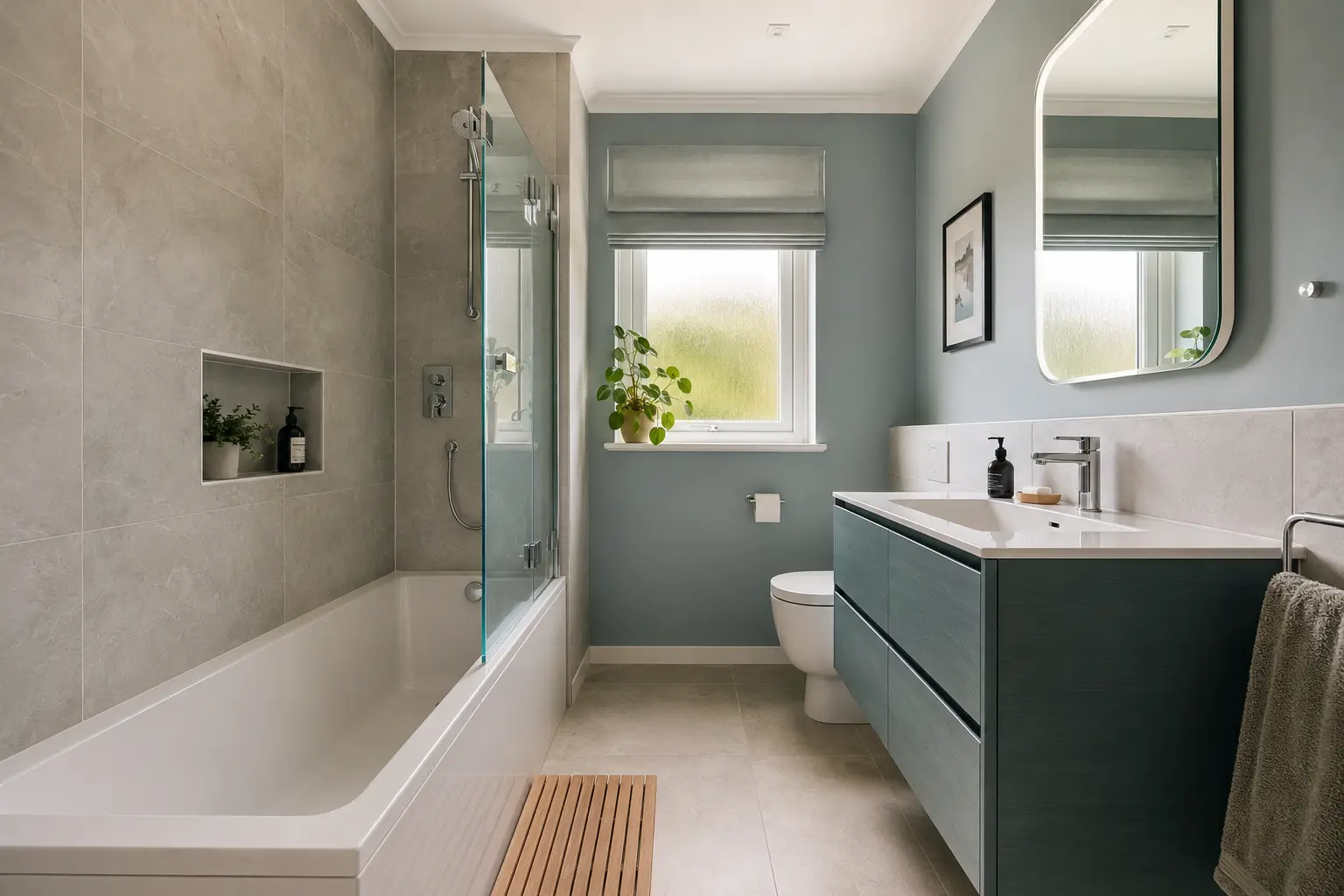
Allow for the whole project
Include removal, preparation, plumbing, electrical work, fitting, surfaces and waste clearance. A suite price alone does not describe the cost of a finished bathroom.
Ask whether the quotation includes VAT, delivery, specialist work and finishing. Clear inclusions make it easier to compare companies fairly.
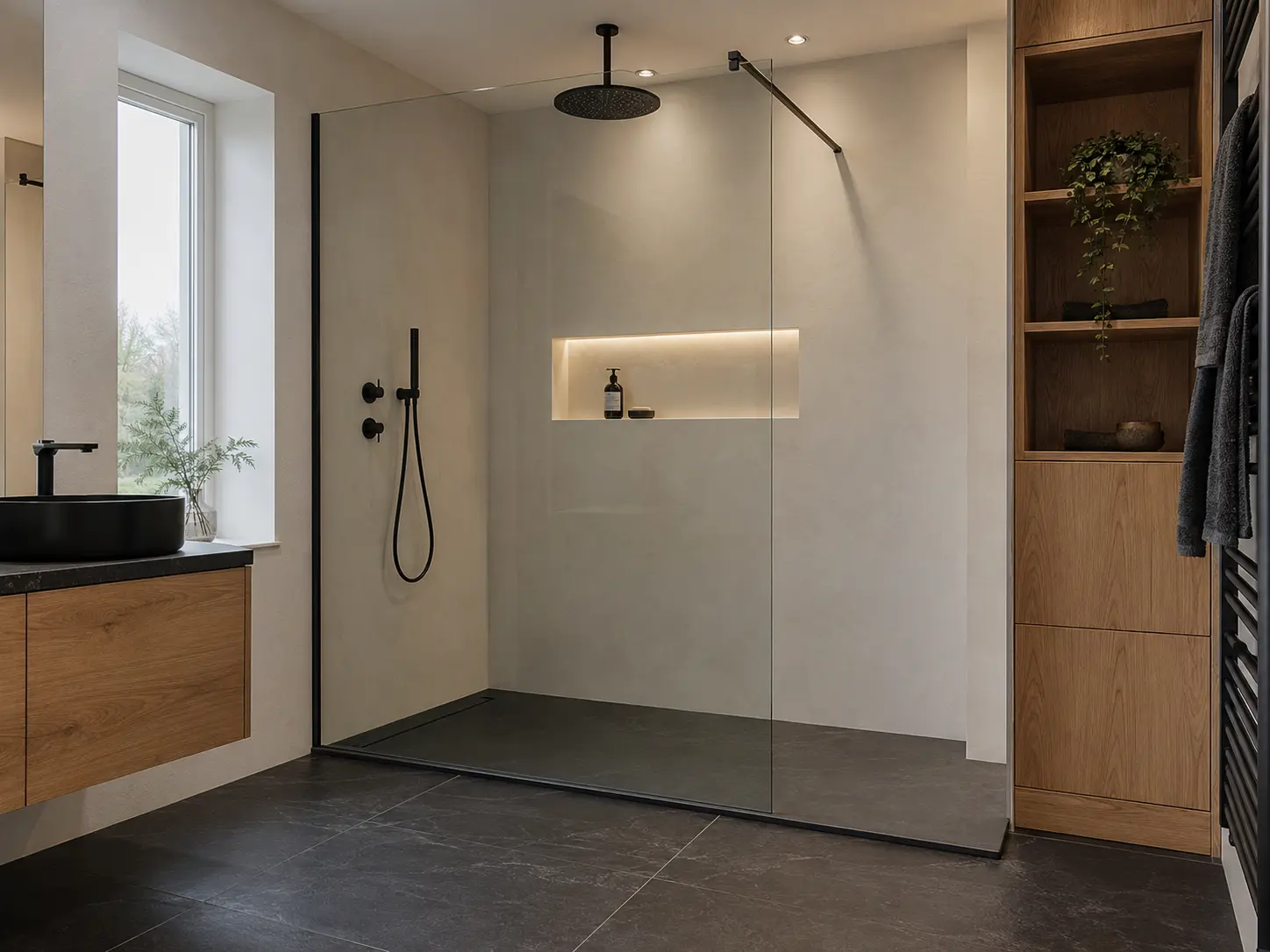
Keep a sensible contingency
Older rooms can reveal weak boards, damaged plaster or pipework that needs attention. A contingency gives you room to deal with a genuine issue without sacrificing an important part of the design.
The appropriate amount depends on the survey and condition of the property. Discuss known risks rather than relying on a percentage alone.
Compare value, not only the total
Check the product specification, preparation and responsibility for coordinating the work. A lower figure may exclude tasks that still have to be paid for later.
Choose the proposal that gives you the clearest route to a dependable finished room. Price matters, but uncertainty can become expensive once work has started.