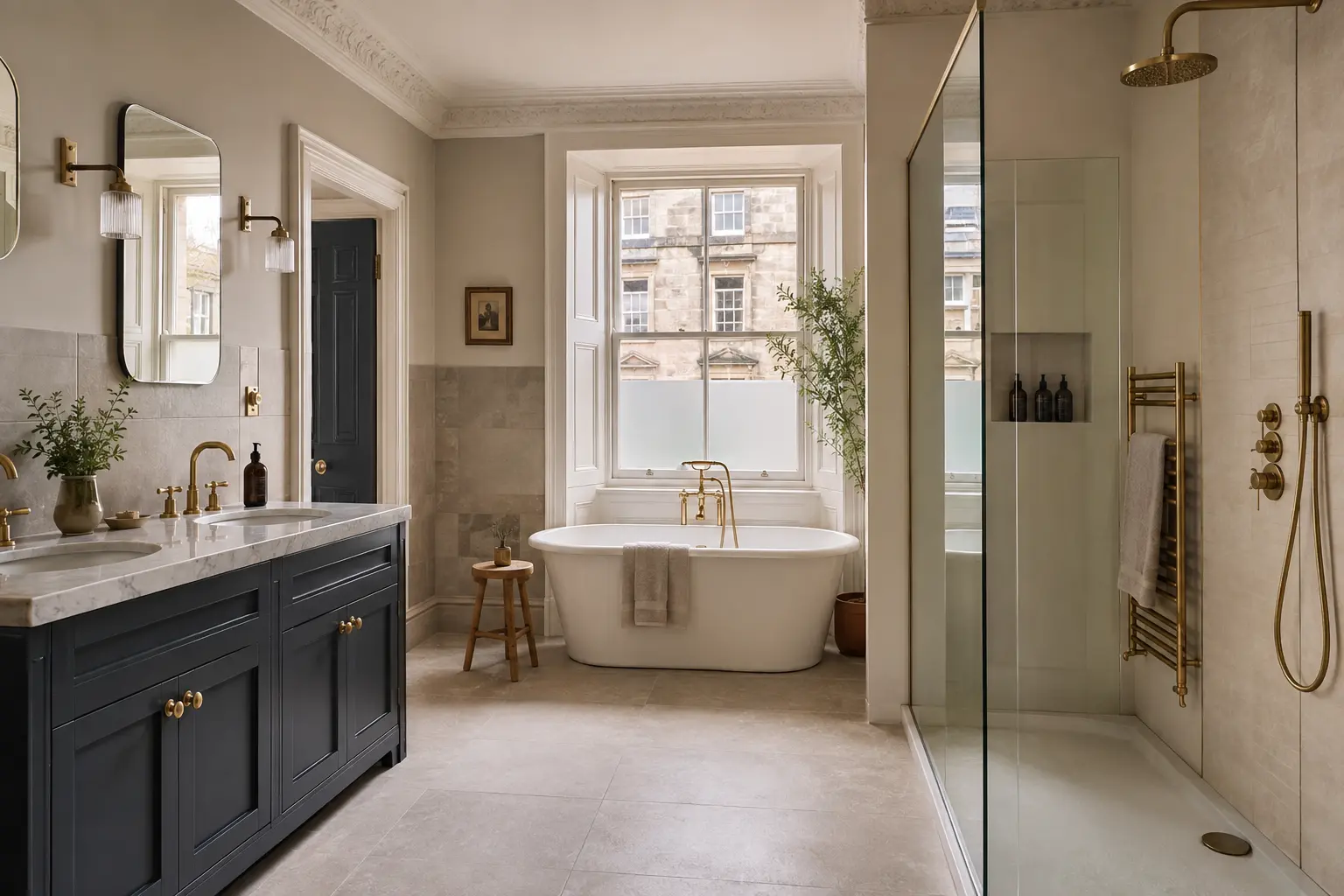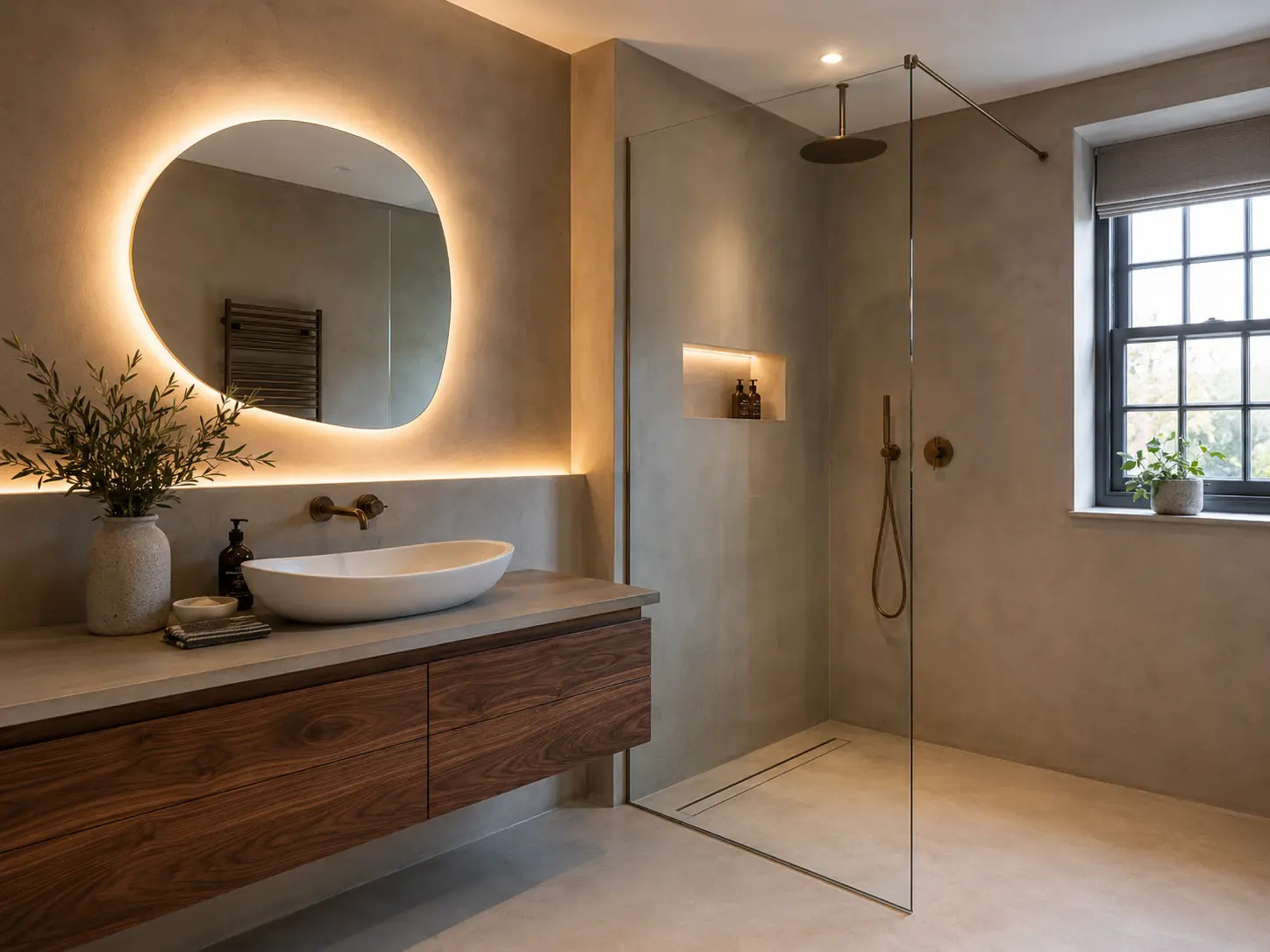
Start with the fixed surfaces
Flooring, wall panels and tiles cover the largest areas and are harder to change. Choose these before small accessories or towels.
Look at the undertone rather than only the label. A grey surface may lean blue, green or warm beige and will influence nearby paint and furniture.
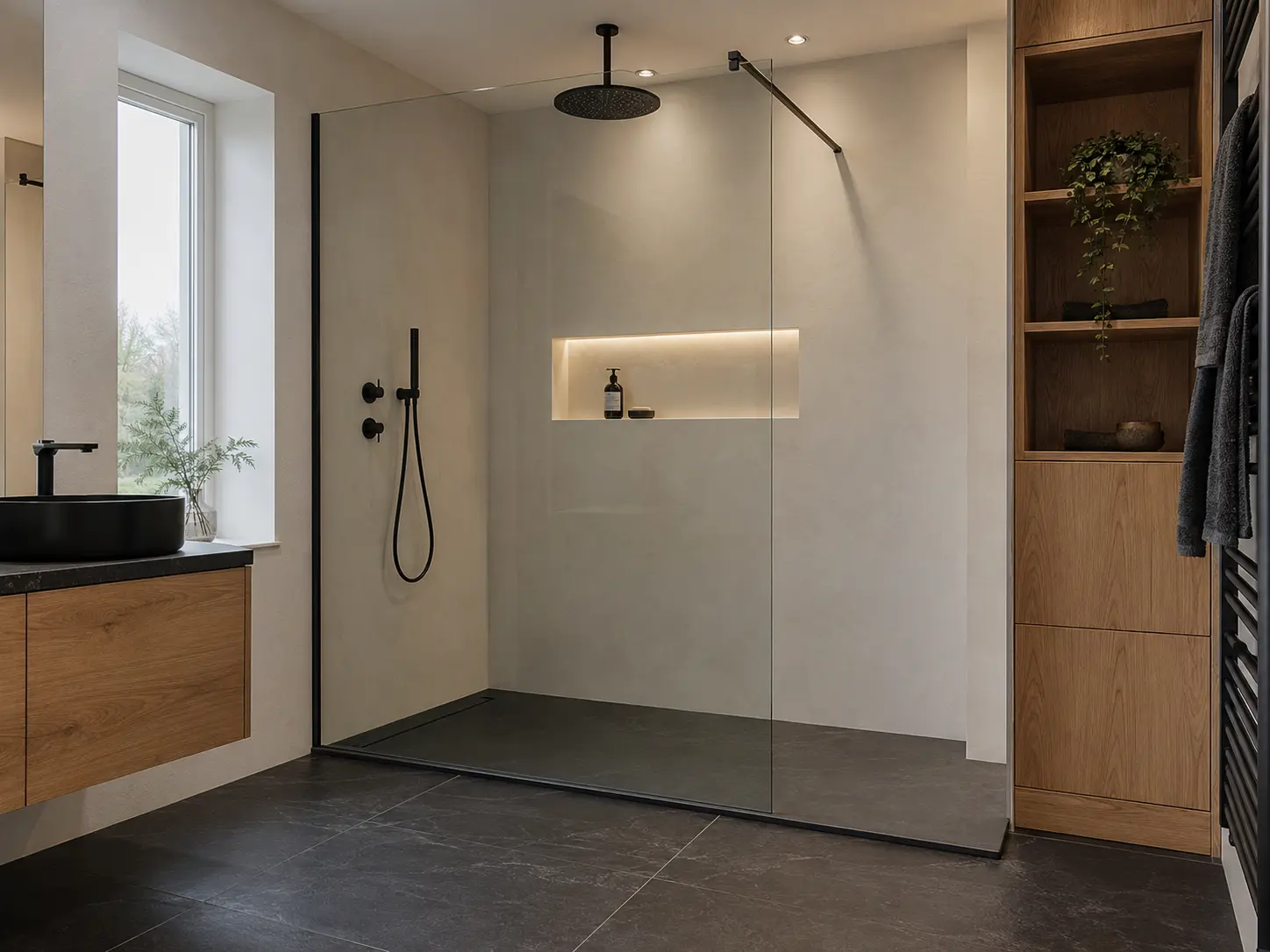
Use a simple palette
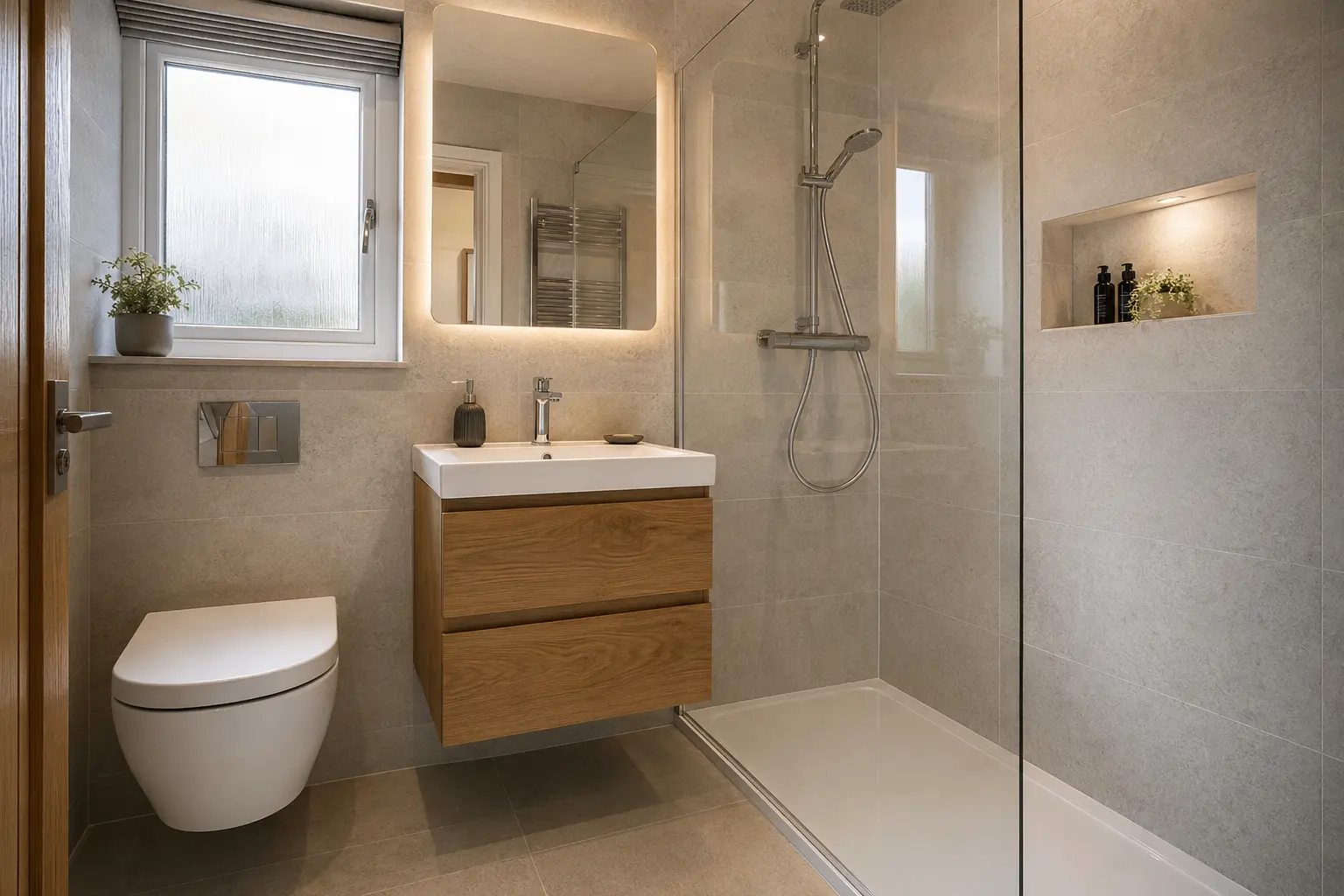
Two or three main materials are usually enough for a calm bathroom. Repeating a timber tone or metal finish helps separate items feel connected.
Contrast can help define a vanity or shower zone, but too many competing patterns make a compact room feel busy.
- One main surface
- One supporting colour
- One consistent metal finish
- Natural texture for warmth
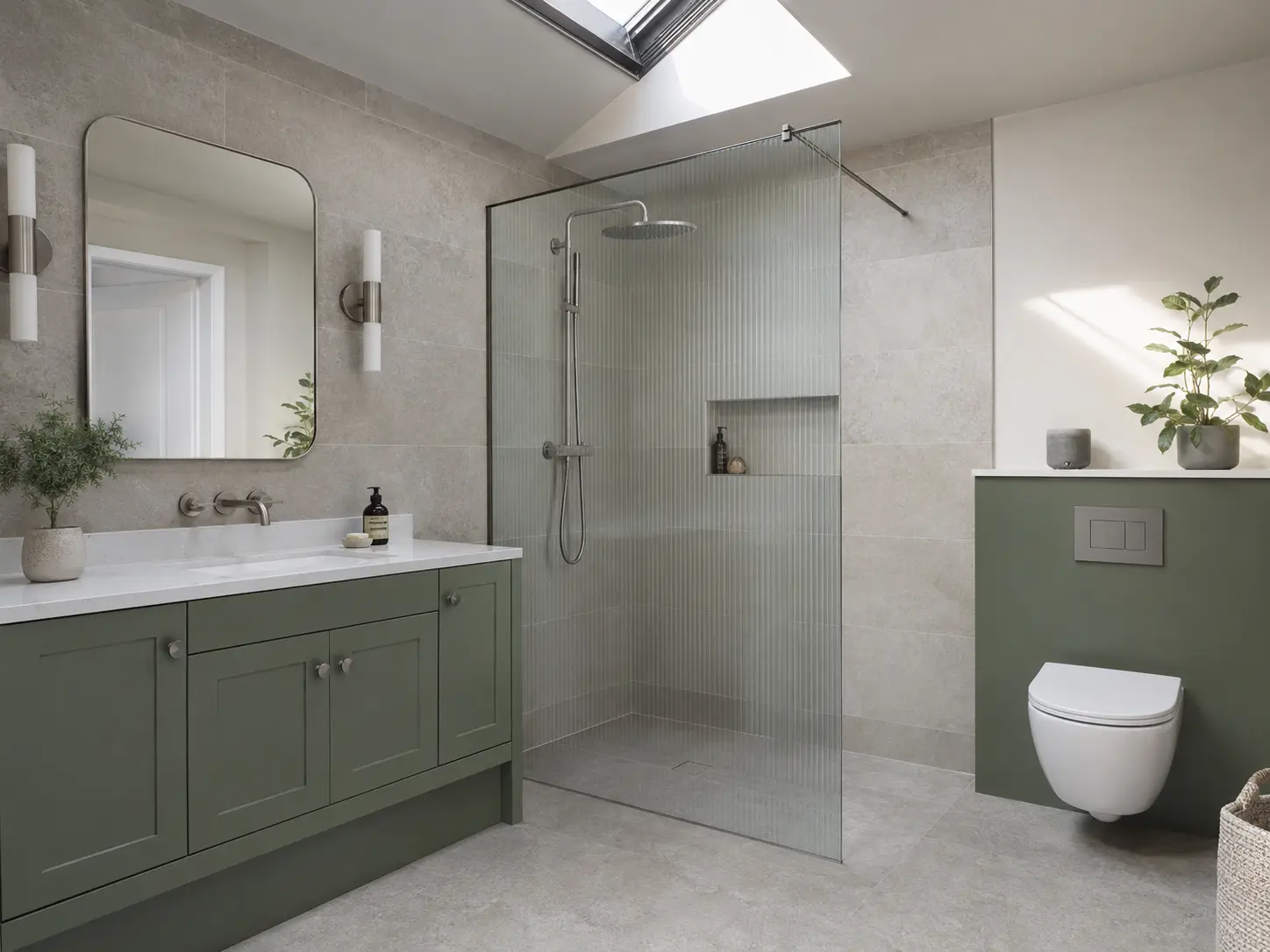
Test samples in the room
View samples beside the window, under the planned mirror light and later in the day. A colour that looks balanced in a showroom can behave differently at home.
Place vertical samples against the wall rather than flat on a table. This better represents how light will strike the finished surface.
Think about cleaning and longevity
Very dark glossy surfaces can show water marks, while heavily textured finishes may need more attention around a shower. Ask how the product should be cleaned before making a final decision.
Use fashionable colour in areas that can be refreshed more easily. A balanced base gives you freedom to change paint, towels and accessories later.